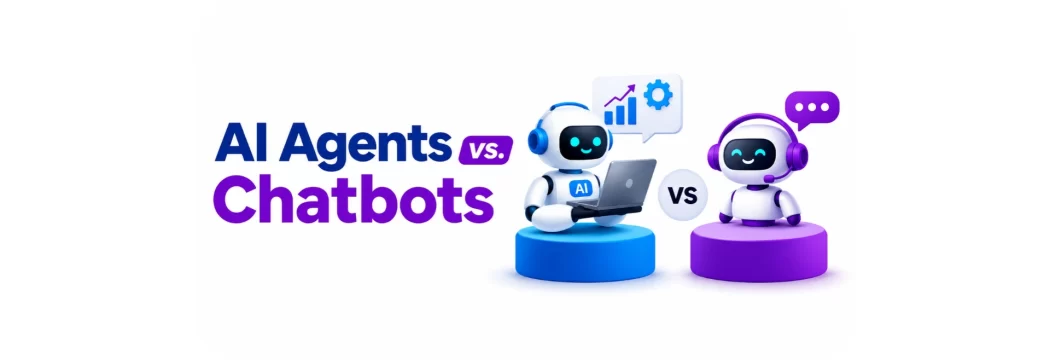
AI Agents vs. Chatbots: Key Differences, Benefits, Use Cases, and How to Choose

AI Agents vs. Chatbots: Key Differences, Benefits, Use Cases, and How to Choose

AI
When comparing AI agents vs. chatbots, the fundamental difference lies in autonomy, decision-making, and task execution. A chatbot is a conversational AI system designed to communicate with users, answer questions, and perform configured tasks. An AI agent is a goal-oriented system that uses agentic AI capabilities such as reasoning, dynamic planning, tool calling, and multi-step workflow automation to achieve specific objectives. While chatbots help businesses automate customer interactions, AI agents extend automation into operational processes involving multiple applications, decisions, and actions. However, modern chatbots are not limited to scripted responses, and AI agents do not necessarily operate without human supervision. Both technologies offer distinct advantages depending on business requirements, workflow complexity, integration needs, and automation objectives. Understanding the difference between AI agents and chatbots helps businesses make informed technology investments,…
Read More
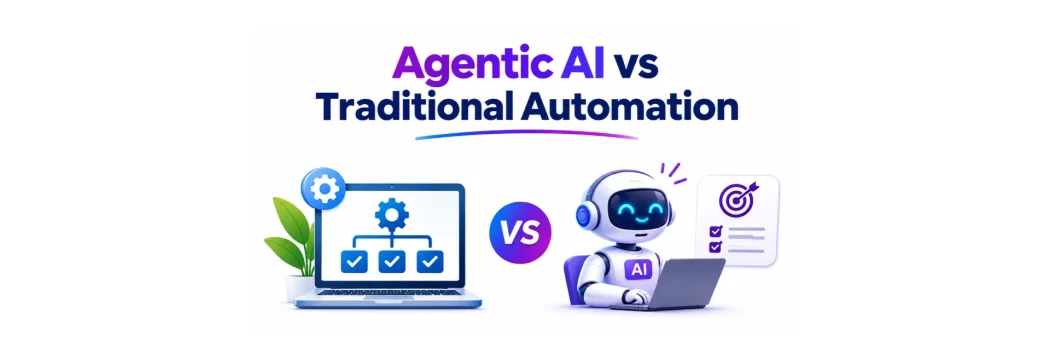
Agentic AI vs Traditional Automation

Agentic AI vs Traditional Automation

AI
A business receives hundreds of customer enquiries, processes invoices, manages appointments, and updates records every day. While many of these tasks can be automated using predefined rules, others require understanding, decision-making, and problem-solving. This is where the difference between agentic AI and traditional automation becomes important. Traditional automation follows predefined instructions to complete tasks, while agentic AI can understand context, plan actions, and respond to changing situations within defined boundaries. Both technologies can help businesses reduce manual work, improve productivity, and manage operating costs. However, choosing the wrong approach can introduce unnecessary expenses, complexity, and operational risks. In this guide, we explore how both technologies work, their key differences, practical applications, costs, and how businesses can combine them to build smarter and more reliable operations. What Is Traditional Automation? Traditional…
Read More
How AI Voice Agents Improve Customer Service Without Replacing Human Teams

How AI Voice Agents Improve Customer Service Without Replacing Human Teams

AI
Customers today expect fast answers, short wait times and help whenever they call. They might be booking an appointment, checking an order or reporting a problem. Either way, they want the call to be quick and useful. Meeting that expectation is hard. Support teams spend hours on the same questions, juggle incoming calls and chase follow-ups. At busy times, calls go unanswered, response times grow and customers get frustrated. AI voice agents for customer service solve much of this. They handle routine calls, give automated support around the clock and capture every inquiry. Their real value isn't replacing your staff. It's giving your staff time back. What Are AI Voice Agents in Customer Service? An AI voice agent is software that talks with callers in natural, spoken conversation. It answers…
Read More
AI Voice Agents for Businesses: Benefits, Use Cases and Implementation

AI Voice Agents for Businesses: Benefits, Use Cases and Implementation

AI
Customer communication plays an important role in business growth. From answering product enquiries and handling support requests to scheduling appointments and managing incoming calls, businesses need to stay accessible to their customers. However, handling every call manually can become challenging as call volumes increase. Missed calls, long waiting times, repetitive enquiries and limited after-hours support can affect customer experience and operational efficiency. This is where AI voice agents for business can make a difference. AI voice agents use artificial intelligence, speech recognition and natural language processing to communicate with customers through natural voice conversations. Unlike traditional automated phone systems that depend on fixed menus, an AI phone agent can understand spoken requests, respond to questions and perform specific business tasks. Businesses can use voice AI for customer service, automated call…
Read More
AI Agents for Business: 7 Everyday Tasks They Can Automate in 2026

AI Agents for Business: 7 Everyday Tasks They Can Automate in 2026

AI
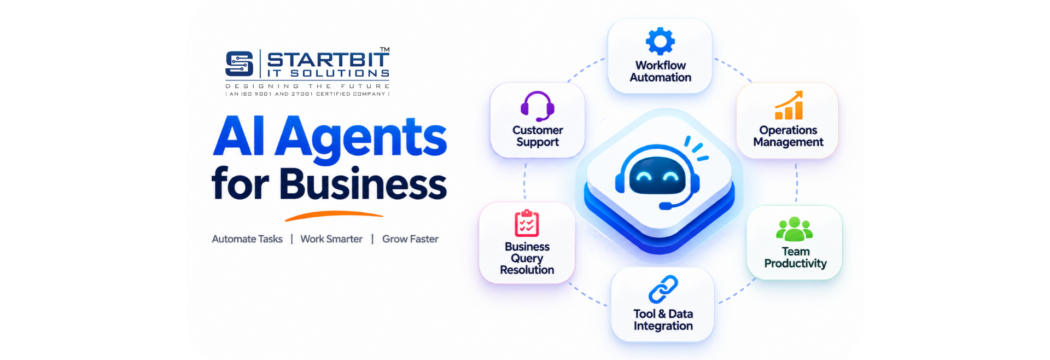
Businesses are increasingly adopting artificial intelligence to improve productivity, reduce manual work, and simplify daily operations. One of the most important developments in this space is the rise of AI agents. Unlike traditional chatbots that primarily answer questions, AI agents can understand business requirements, make decisions, interact with different applications, and complete tasks with minimal human intervention. For example, when a customer asks about an order, an AI agent can retrieve order details, check delivery status, prepare a response, update the CRM, and notify the support team if further action is required. This ability to understand, decide, and act makes AI agents valuable for businesses looking to automate everyday processes. But where can businesses actually use them? Let's explore seven practical tasks AI agents can automate in 2026, how they…
Read More
Agentic AI for Business: How AI Agents Transform Business Operations

Agentic AI for Business: How AI Agents Transform Business Operations

AI
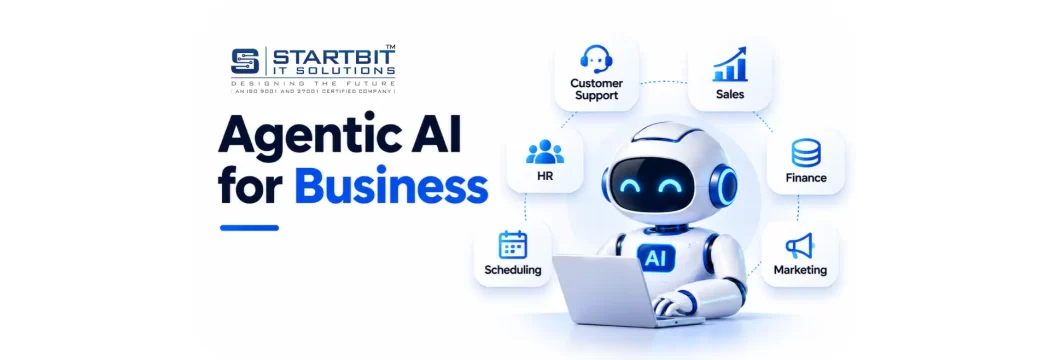
Artificial Intelligence is changing how businesses manage operations, interact with customers and make decisions. While traditional AI tools help generate content, answer questions and analyze information, the next generation of AI is taking automation further by performing tasks and managing complete workflows. This is where Agentic AI for business is becoming increasingly important. Agentic AI enables businesses to use intelligent AI agents that can understand objectives, plan tasks, interact with business applications and execute actions with minimal human intervention. Instead of simply responding to instructions, these systems can work toward defined business goals and manage multiple steps within a workflow. For example, an AI agent for customer support can understand a customer request, retrieve order information, check company policies, prepare a response and update the support ticket. Similarly, sales agents…
Read More
How to Hire a Salesforce Consultant: 15 Questions to Ask Before Signing

How to Hire a Salesforce Consultant: 15 Questions to Ask Before Signing

Salesforce
Choosing the right Salesforce consultant is an important decision for any business. The right consultant can help you manage customer relationships, automate business processes, improve sales performance, and get the most out of Salesforce. However, choosing the wrong consultant can lead to project delays, unexpected costs, poor data management, and ongoing technical issues. A proposal may look good, and the price may fit your budget, but important details such as data migration, integrations, employee training, and post-launch support can easily be overlooked. To avoid these problems, you need to ask the right questions before signing a contract. In this guide, we cover 15 important questions to ask before hiring a Salesforce consultant, along with what to expect from a reliable consulting partner and the warning signs to watch for. Why…
Read More
Salesforce vs HubSpot vs Zoho CRM (2026): Features, Pricing, and Which CRM Is Best?

Salesforce vs HubSpot vs Zoho CRM (2026): Features, Pricing, and Which CRM Is Best?

Salesforce
Choosing the right CRM software is important for managing customers, sales, and business operations. A good CRM helps businesses organise customer information, track leads, manage sales activities, and improve customer relationships. Three popular CRM platforms are Salesforce, HubSpot, and Zoho CRM. Although all three offer customer management tools, they differ in pricing, customisation, automation, and ease of use. So, which CRM is the right choice for your business in 2026? In this guide, we compare Salesforce vs HubSpot vs Zoho CRM to help you understand their features, pricing, advantages, limitations, and ideal use cases. Salesforce vs HubSpot vs Zoho CRM: Quick Comparison FeaturesSalesforceHubSpotZoho CRMBest forMedium and large businessesSmall and growing businessesBudget-conscious businessesEase of useRequires trainingEasyModerateCustomisationAdvancedGoodVery goodAutomationAdvancedGoodAdvancedAIEinstein and AgentforceBreeze AIZia AIIntegrationsAppExchangeHubSpot MarketplaceZoho MarketplaceFree CRMNoYesYes, limited usersStarting paid price$25/user/monthAround $15–20/seat/month$14/user/month 1. Salesforce…
Read More
Salesforce Data Migration: 10 Common Problems and How to Avoid Them

Salesforce Data Migration: 10 Common Problems and How to Avoid Them

Salesforce
Moving your business data to Salesforce may sound simple. You export data from your existing system and import it into Salesforce. But in reality, data migration requires much more planning. Every business stores information differently. Customer details, account records, sales history, and other business data may have different formats and structures. If this information is not prepared properly, problems can appear after moving to Salesforce. For example, you may find duplicate customer records, missing contact details, incorrect account information, or reports showing the wrong numbers. These issues can affect your team's daily work and make it difficult to get accurate business insights. A successful Salesforce data migration is not just about moving data. It is about making sure the information is accurate, complete, and ready to use. In this article,…
Read More
Salesforce Implementation Cost in 2026: Pricing Guide and Ways to Save

Salesforce Implementation Cost in 2026: Pricing Guide and Ways to Save

Salesforce
Salesforce helps businesses manage sales, customer service, marketing, and customer data in one place. However, the cost of Salesforce is more than the software subscription. You also need to consider implementation, customization, data migration, integrations, employee training, and ongoing support. At Startbit IT Solutions, we help businesses implement, customize, integrate, and maintain Salesforce solutions. Founded in 2008, our company focuses on delivering technology solutions that meet real business needs. How Much Does Salesforce Implementation Cost in 2026? Salesforce implementation can cost between $10,000 and $500,000 or more, depending on your business requirements, system complexity, and implementation scope. Here is an estimated cost breakdown by business size. Business TypeTypical UsersSetup CostEstimated TimelineSmall businessUp to 50$10,000–$50,0004–10 weeksGrowing or mid-sized business50–250$50,000–$250,0003–6 monthsEnterprise250+$150,000–$500,000+6–12+ monthsMulti-cloud or global businessAny$500,000+12+ months, in phases These figures cover implementation…
Read More

Got Project on mind? Let's ConnectContact Us

Secured By miniOrange