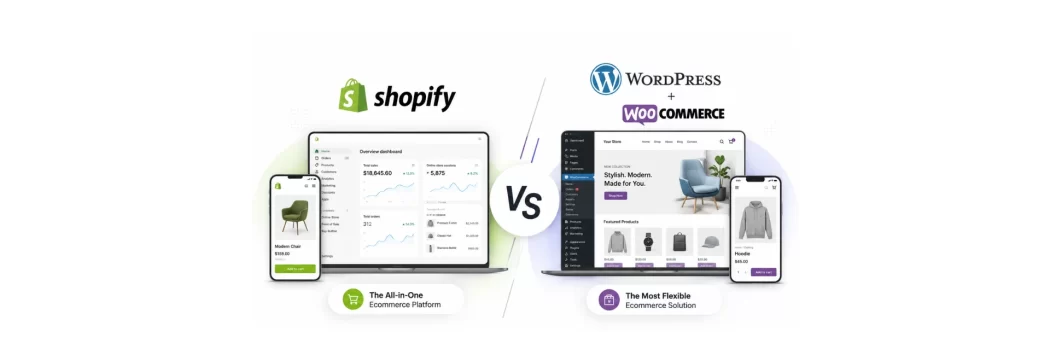


Shopify vs WordPress (WooCommerce)

Shopify vs WordPress (WooCommerce)

Shopify, WooCommerce, WordPress
Choosing an ecommerce platform isn’t just a technical decision - it’s a business-defining one. The platform you select determines how fast you can launch, how much control you have, how secure your customer data is, and how easily your store can scale as sales grow. Think of it like choosing the foundation for a building. You can redesign rooms later, but if the foundation doesn’t support growth, cracks will eventually appear.  In today’s ecommerce landscape, two platforms dominate the conversation: Shopify and WordPress with WooCommerce. Both power millions of online stores worldwide, from solo entrepreneurs selling handmade products to enterprise-level brands processing millions in revenue. Yet despite serving the same purpose, these platforms couldn’t be more different under the hood.  Shopify promises simplicity, speed, and peace of mind. It’s a fully hosted solution designed to let you focus on selling, not managing technology. WordPress with…
Read More
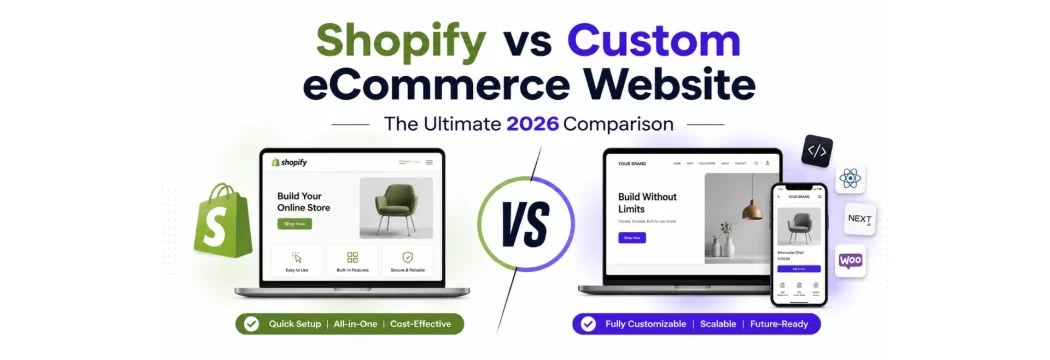
Shopify vs Custom eCommerce Website – The Ultimate 2026 Comparison 

Shopify vs Custom eCommerce Website – The Ultimate 2026 Comparison 

Shopify
What Is an eCommerce Website?  An eCommerce website is an online store where businesses sell products or services over the internet. Instead of visiting a physical shop, customers can browse products, compare prices, place orders, and make payments online - all in one place.  What makes an eCommerce website different from a normal website is its functionality. A blog shares information. A portfolio shows work. An eCommerce website sells, manages orders, tracks performance, and helps businesses grow by turning visitors into customers.  The Role of Online Stores in Modern Business  Online stores are now the foundation of modern business. What was once optional is now essential. Customers expect fast, convenient, and flexible shopping - and eCommerce delivers exactly that. From small startups to global brands, online stores remove location limits…
Read More
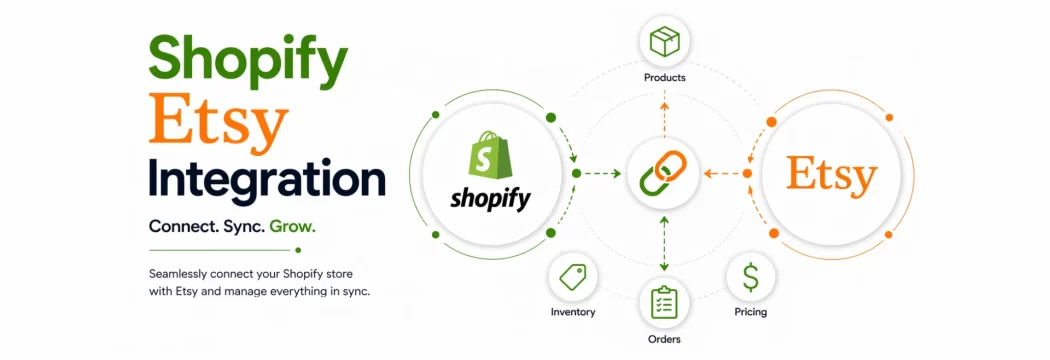
Shopify Etsy Integration: How to Sync Products, Orders & Inventory 

Shopify Etsy Integration: How to Sync Products, Orders & Inventory 

Shopify
Selling online today isn’t about picking just one platform - it’s about building a connected system through Shopify Etsy Integration. Many sellers begin with Etsy because it brings quick visibility and ready customers. As their business grows, they move to Shopify to build their own brand, have more control, and scale properly. Instead of choosing one over the other, you can connect both. When you integrate Shopify with Etsy, you don’t have to manage two completely separate stores. Your products, orders, and inventory can work together in one system, which saves time and reduces manual work. The goal is simple: help you run a smarter, more connected online business without confusion or technical complexity. 1. Understanding Shopify and Etsy Before you even think about integrating Shopify with Etsy, you need…
Read More
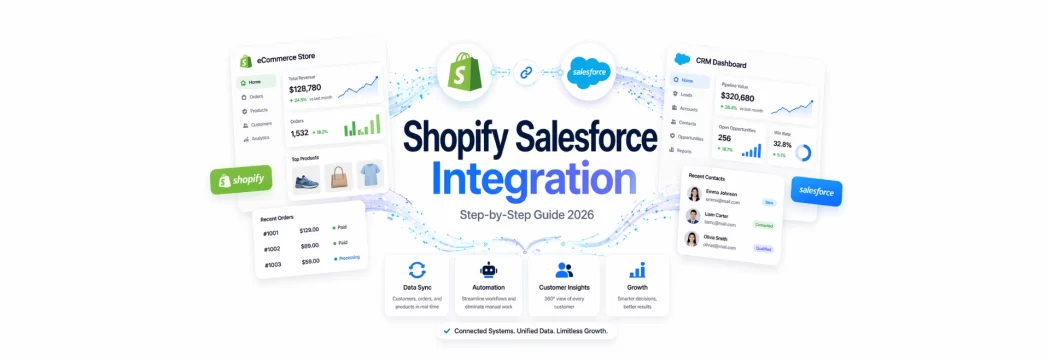
Shopify Salesforce Integration: The Complete Step-by-Step Guide (2026)

Shopify Salesforce Integration: The Complete Step-by-Step Guide (2026)

Salesforce, Shopify
Modern businesses don’t struggle because they lack tools - they struggle because their tools don’t work together. Shopify handles online sales, while Salesforce manages customers and business processes. When they operate separately, teams miss important data, leading to poor decisions and lost growth. What is Shopify Salesforce Integration? Shopify and Salesforce were built for different purposes, and that’s exactly why integration is needed.  Shopify is designed to run transactions. It manages products, pricing, checkout, payments, shipping, taxes, and order fulfillment. Its strength is speed and reliability at scale. Shopify tells you what was sold, when it was sold, and how much revenue was generated.  Salesforce is designed to manage relationships and processes. It tracks leads, contacts, accounts, opportunities, campaigns, service cases, and internal workflows. Salesforce answers deeper questions: Who are our best…
Read More
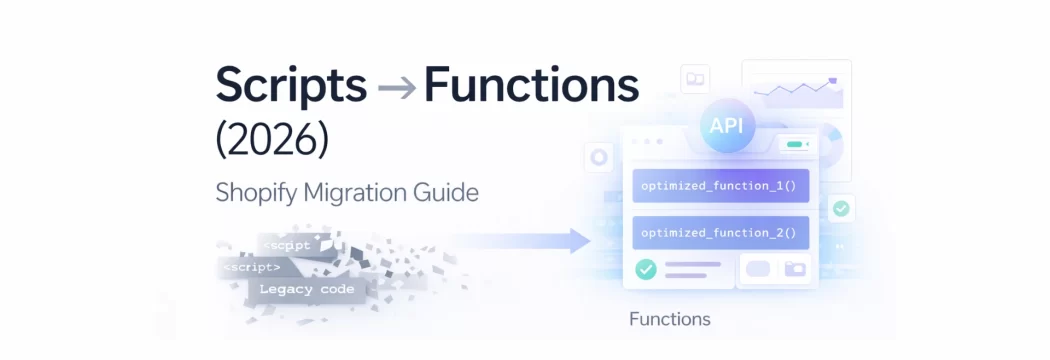
Shopify Scripts to Functions Migration (2026)

Shopify Scripts to Functions Migration (2026)

Shopify
If you’re running a Shopify store, this isn’t just another update you can ignore. The Shopify Scripts to Functions migration is a major shift that directly affects how your checkout works, and if you don’t act in time, things can break in ways that hurt your sales. Shopify has officially set two important deadlines: April 15, 2026 – You can no longer edit or publish Scripts June 30, 2026 – All Scripts stop working completely After that, any customization built using Scripts simply disappears. That means discounts may stop applying, shipping logic could fail, and payment options might behave differently than expected. Here’s the tricky part, Shopify will not migrate anything for you. Every Script in your store needs to be manually reviewed, replaced, and tested. And if your store…
Read More
Finding the Perfect Shopify Development Firm

Finding the Perfect Shopify Development Firm

Shopify
There are many ways to create a presence on the internet. The most effective of these ways is to find a partner that can help you develop your store online. If you want your store to have a good presence and sell well, you need a partner who can help you create an online store using Shopify, which has over 10% of all eCommerce sales in the U.S. Furthermore, Shopify has an uptime of 99.99%, which means you will always be able to access your store at any time. There are over 3,900 Shopify developers (developers that work with Shopify). Finding the right one that meets your vision is important, as that will help you harness the full power of Shopify.   What Does a Shopify Development Firm Do? A Shopify development…
Read More
Migration of Blog Posts and Pages from WordPress to Shopify 2026 

Migration of Blog Posts and Pages from WordPress to Shopify 2026 

Shopify, WordPress
WordPress and Shopify operate on different systems, there may be some differences in the migrated content compared to the original WordPress version. I will share the best approach for migrating WordPress pages and posts to Shopify.  Steps to migrate Blog posts and Pages from WordPress to Shopify:  Use “Wp All Export” plugin to export blog posts and pages.  Rename the export sheet name and save name like “WordPress-Posts-Export-2026-January-23-1638.csv”.  Use the matrixify app in Shopify and upload file.  Select Import options – select “Dry-run” and fill Old server URL.  Download Matrixify-generated files.  Upload the image files to your Content -> Files section in Admin.  Review the generated Excel file carefully and remove or correct any unnecessary information before proceeding, particularly if this was a dry run.  Import your Excel file into the Matrixify app to create your blog posts or pages (if you have completed…
Read More
The Ultimate Shopify CRO Audit Guide to Boost Sales in 2026 

The Ultimate Shopify CRO Audit Guide to Boost Sales in 2026 

Shopify
A Conversion Rate Optimization (CRO) audit is a comprehensive review of a website’s performance to uncover what’s helping and what’s hindering conversions. It involves evaluating user behavior, site design, messaging, and analytics to pinpoint obstacles in the conversion process and highlight opportunities for improvement. By analyzing elements such as navigation, page layout, calls-to-action, content relevance, and overall user experience, a CRO audit helps you make data-informed changes that boost conversion rates and improve business outcomes.  Key Features:  A CRO audit analyzes your entire conversion funnel to uncover where and why visitors leave without completing a purchase.  A CRO audit helps you focus on high-traffic pages, such as product pages and the checkout, to drive the biggest impact.  A CRO audit helps maintain optimal conversion rates and identify new issues early before they impact performance.  What Is a Shopify CRO Audit? A Shopify…
Read More
Scaling a Shopify Business: Operations, Expansion & Long-Term Growth Planning

Scaling a Shopify Business: Operations, Expansion & Long-Term Growth Planning

Shopify
1. Scaling Operations As sales grow, operations must keep up.  Key areas:  Reliable fulfillment partners.  Inventory planning.  Quality control.  Clear workflows.  Smooth operations prevent delays and unhappy customers.  2. Hiring & Outsourcing You can’t do everything alone.  Roles to outsource:  Customer support.  Design and content.  Ad management.  Technical tasks.  Smart hiring saves time and boosts results.  3. Financial Planning Money management keeps your business alive.  Best practices:  Track expenses and margins.  Monitor cash flow.  Reinvest profits wisely.  Prepare for taxes.  Cash flow is the heartbeat of your store.  4. Multi-Channel & International Expansion Growth doesn’t stop at Shopify.  Expansion ideas:  Sell on marketplaces (Amazon, Flipkart).  Social commerce (Instagram, Facebook).  International shipping.  Localized pricing.  Expand slowly and strategically. 5. Managing Risks Growth brings challenges.  Common risks:  Customer support overload.  Inventory shortages.  Cash flow issues.  Team coordination…
Read More
Customer Retention, Email & Automation Strategies for Shopify Growth

Customer Retention, Email & Automation Strategies for Shopify Growth

Shopify
1. Email Marketing  Email is one of the most powerful tools for building relationships.  Must-have email flows:  Welcome series.  Abandoned cart reminders.  Order confirmations.  Promotions and updates.  Emails turn one-time buyers into repeat customers.   2. SMS & Push Notifications SMS is fast and personal, but use it carefully.  Best uses:  Cart reminders.  Flash sale alerts.  Shipping updates.  Back-in-stock messages.  Don’t spam - respect customer trust.  3. Customer Retention & Loyalty  Keeping customers is cheaper than finding new ones.  Retention strategies:  Loyalty programs.  Personalized offers.  Great customer support.  Regular follow-ups.  Happy customers = higher lifetime value.  4. Automation & AI Automation saves time and reduces manual work.  Examples:  Automated email flows.  Chatbots for support.  Inventory management tools.  Order fulfillment systems.  Automation = more time to focus on growth.  Click “Continue Reading” to explore the…
Read More