
How Much Does a Salesforce Developer Charge Per Hour? A Practical Guide for Businesses

How Much Does a Salesforce Developer Charge Per Hour? A Practical Guide for Businesses

Salesforce
Hiring a Salesforce developer can help your business automate processes, manage customer data, improve reporting, and connect Salesforce with other business applications. But before starting a project, one important question needs to be answered: How much does a Salesforce developer cost per hour? The answer depends on the developer’s experience, location, technical skills, project complexity, and hiring model. In this guide, we explain Salesforce developer hourly rates, estimated project costs, common pricing models, and the factors to consider before choosing a developer. Whether you need a small Salesforce customization or a complete implementation, this guide will help you plan your budget and make an informed decision. 1. What Is the Average Hourly Rate of a Salesforce Developer? Salesforce developer hourly rates can range from around $20 to more than $200,…
Read More
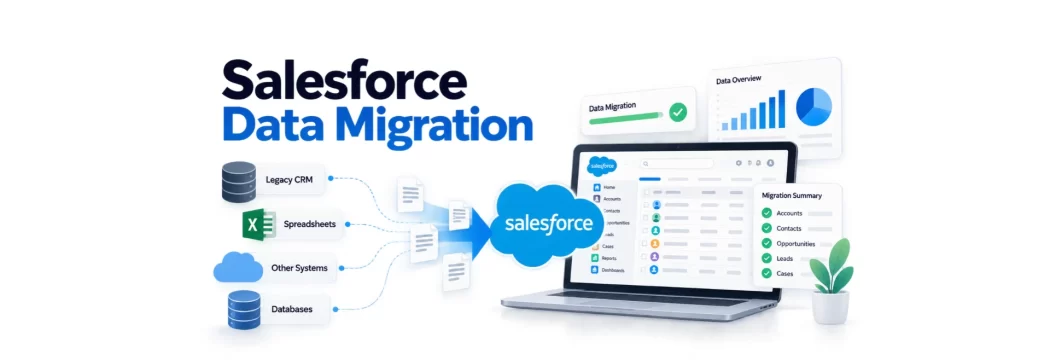
Salesforce Data Migration: A Complete Guide to Planning, Moving, and Managing Your Data

Salesforce Data Migration: A Complete Guide to Planning, Moving, and Managing Your Data

Salesforce
Moving business data to Salesforce is more than copying records from one system to another. A successful migration requires careful planning, data cleaning, accurate field mapping, testing, and user training. Many businesses migrate to Salesforce to improve customer management, streamline sales processes, connect different systems, and make better business decisions. However, if the migration is not planned properly, companies may face duplicate records, missing information, broken relationships, incorrect reports, and business disruptions. The good news is that these problems can be avoided with the right approach. This guide explains Salesforce data migration in simple terms, including why it matters, how to prepare your data, which tools to use, how to test the migration, and what to do after moving to Salesforce. What Is Salesforce Data Migration? Salesforce data migration is…
Read More
Salesforce Implementation Cost in 2026: A Simple Guide for Businesses

Salesforce Implementation Cost in 2026: A Simple Guide for Businesses

Salesforce
Implementing Salesforce can help businesses manage customer relationships, automate daily tasks, improve sales processes, and make better decisions. However, before starting a Salesforce project, it is important to understand the implementation cost, licensing fees, and ongoing expenses. Salesforce implementation can cost anywhere from $5,000 to $500,000 or more, depending on your business size, project requirements, customization needs, and integrations. In this guide, we explain Salesforce implementation costs, the factors that affect pricing, common hidden expenses, and ways to manage your budget. 1. Salesforce License Cost in 2026 Salesforce charges businesses based on the selected edition and the number of users. Licensing fees are separate from implementation costs. Salesforce EditionPrice per User/MonthBest ForStarter Suite$25Small businesses with basic CRM needsPro Suite$100Growing businesses that need more automationEnterprise$195Businesses requiring advanced customization and integrationsUnlimited$395Large teams…
Read More
AppExchange vs. Custom Development: How to Choose the Right Path for Your Salesforce Org

AppExchange vs. Custom Development: How to Choose the Right Path for Your Salesforce Org

Salesforce
Salesforce provides powerful CRM features, but every business has unique needs. As an organization grows, its standard Salesforce functionality may no longer be enough. This raises an important question: Should you install an existing app from Salesforce AppExchange or build a custom solution? Both options have advantages. AppExchange apps offer ready-made functionality, faster implementation, and vendor support. Custom development gives you greater flexibility, control, and the ability to build solutions around your business processes. Choosing the wrong approach can increase costs, delay implementation, and create unnecessary complexity. This guide combines insights from five industry articles into a practical framework to help you evaluate both options and choose the right approach for your Salesforce org. The recommendations should be considered alongside your specific business requirements, as the source articles were published…
Read More
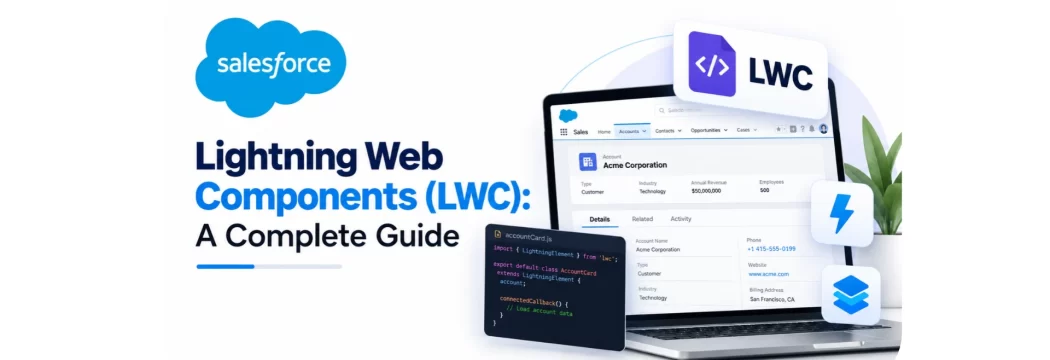
Salesforce Lightning Web Components (LWC): A Complete Guide

Salesforce Lightning Web Components (LWC): A Complete Guide

Salesforce
Modern business applications need user interfaces that are fast, interactive, responsive, and easy to maintain. Within Salesforce, developers can use Lightning Web Components (LWC) to build customized interfaces that meet these requirements. LWC allows developers to create reusable UI components using HTML, JavaScript, and CSS. Instead of building every interface from scratch, developers can create individual components and combine them to develop complete Salesforce applications. For example, a company might need a custom dashboard to display sales performance, a form to register new customers, or a component that shows account information in an interactive table. LWC makes it possible to build these features while working within the Salesforce platform. This guide explains what Salesforce Lightning Web Components are, how they work, their main benefits, their differences from Aura Components, and…
Read More
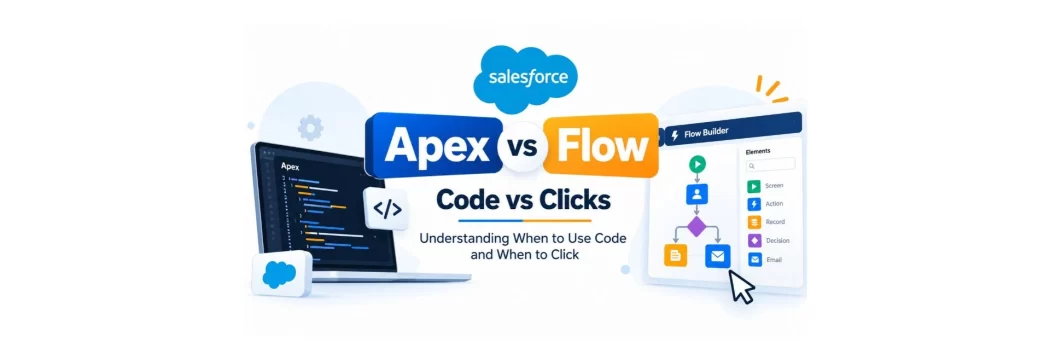
Salesforce Apex vs Flow: Understanding When to Use Code and When to Click

Salesforce Apex vs Flow: Understanding When to Use Code and When to Click

Salesforce
When working with Salesforce, one question often comes up: Should we use Flow to automate a process, or should we write Apex code? Both options help automate business tasks and reduce manual work. The difference lies in how they are built and how much control they offer over the process. Flow allows you to create automation through a visual interface, while Apex gives developers the flexibility to write custom code. Understanding both approaches helps you choose a solution that fits the business requirement and remains easy to maintain. 1. Understanding Salesforce Automation Salesforce is commonly used to manage customer information, sales leads, opportunities, contacts, and support cases. Many of the activities associated with these records can be automated. For example, imagine a company receives a new Lead through its website.…
Read More
Salesforce Implementation Checklist: A Complete Guide to Implement Salesforce Seamlessly

Salesforce Implementation Checklist: A Complete Guide to Implement Salesforce Seamlessly

Salesforce
Salesforce is one of the most powerful CRM platforms for businesses that want to manage customers, sales, service, marketing, automation, reporting, and business operations from a single system. It helps organizations improve customer relationships, streamline internal processes, automate repetitive tasks, and make better decisions with real-time data. A well-planned Salesforce implementation checklist helps businesses move step by step and ensures that every important stage is completed before the system goes live. What Is a Salesforce Implementation Checklist? A Salesforce implementation checklist is a structured roadmap that defines all the important steps required to implement Salesforce successfully. It helps businesses plan, configure, migrate, test, launch, and optimize Salesforce in a systematic way. This checklist guides your team through every stage of implementation, including business goal planning, stakeholder alignment, requirement gathering, data…
Read More
Salesforce Implementation Roadmap

Salesforce Implementation Roadmap

Salesforce
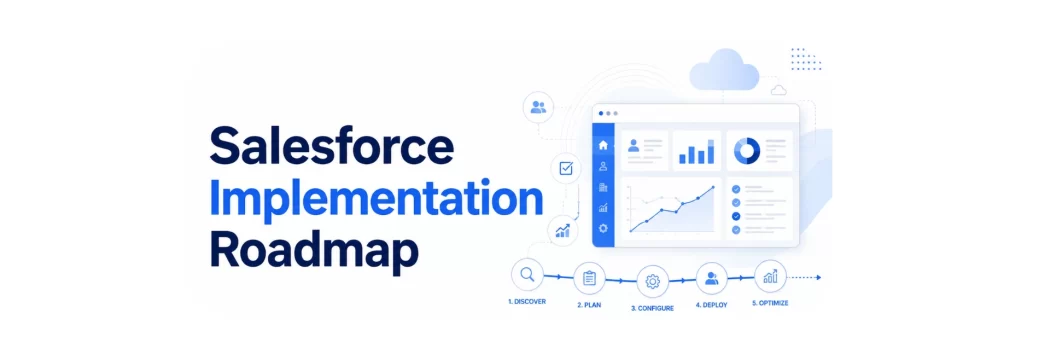
A Salesforce implementation roadmap gives your organization a structured plan to move from existing manual processes, spreadsheets, or old CRM systems to a fully configured Salesforce CRM platform. It helps define what needs to be implemented, who will use the system, what data should be migrated, which workflows should be automated, and how success will be measured after go-live. In this guide, we will explain the complete Salesforce implementation roadmap in a simple, practical, and business-friendly way. What Is a Salesforce Implementation Roadmap? A Salesforce implementation roadmap is a step-by-step plan that explains how Salesforce will be planned, configured, customized, tested, launched, and improved after implementation. It acts as a blueprint for the entire Salesforce CRM implementation process. Instead of randomly setting up objects, fields, reports, dashboards, and automations, the…
Read More
Salesforce Implementation Process: Complete Step-by-Step Guide

Salesforce Implementation Process: Complete Step-by-Step Guide

Salesforce
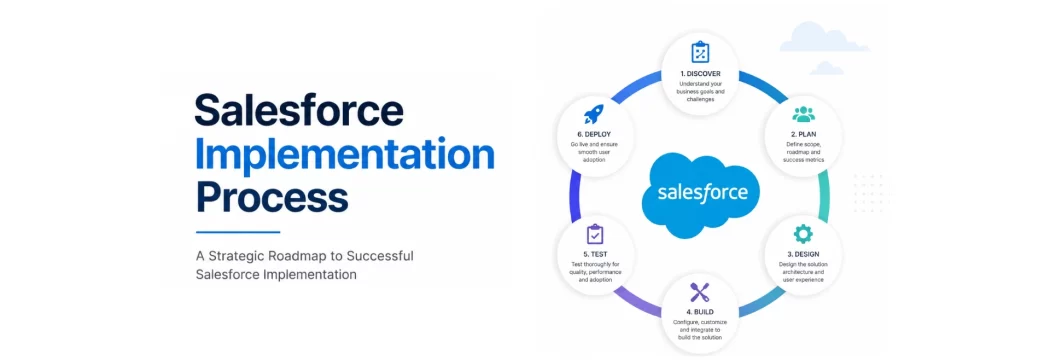
The Salesforce implementation process is a structured approach to planning, setting up, customizing, testing, launching, and optimizing Salesforce CRM for a business. A successful implementation helps companies centralize customer data, automate workflows, improve sales visibility, manage customer relationships, and make better business decisions. Salesforce is a powerful CRM platform, but its success depends on how well it is implemented. Without proper planning, businesses may face poor user adoption, messy data, weak reporting, unnecessary customization, and integration issues. That is why following a clear Salesforce implementation process is important for long-term CRM success. In this guide, we explain the complete Salesforce implementation process step by step. What Is the Salesforce Implementation Process? The Salesforce implementation process is the complete journey of setting up Salesforce CRM according to business needs. It includes…
Read More
Explore the Complete Salesforce Implementation Guide

Explore the Complete Salesforce Implementation Guide

Salesforce
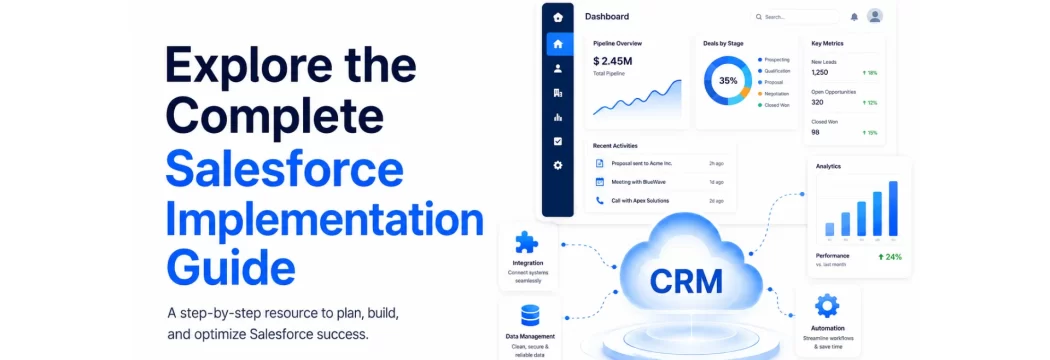
Salesforce Implementation Services help businesses set up, customize, integrate, migrate, automate, and optimize Salesforce CRM based on their sales, service, marketing, and operational workflows. Startbit IT Solutions provides end-to-end Salesforce implementation services for businesses that want to move from manual processes, spreadsheets, outdated CRMs, or disconnected systems to a scalable Salesforce CRM platform. Our Salesforce implementation experts help you plan the right CRM roadmap, configure Salesforce correctly, migrate clean data, automate workflows, integrate third-party tools, train users, and provide ongoing post-launch support. What Are Salesforce Implementation Services? Salesforce Implementation Services include the complete process of setting up Salesforce CRM for a business. This includes business analysis, Salesforce configuration, customization, data migration, integration, automation, testing, user training, deployment, and ongoing optimization. A successful Salesforce implementation helps businesses centralize customer data, improve…
Read More