
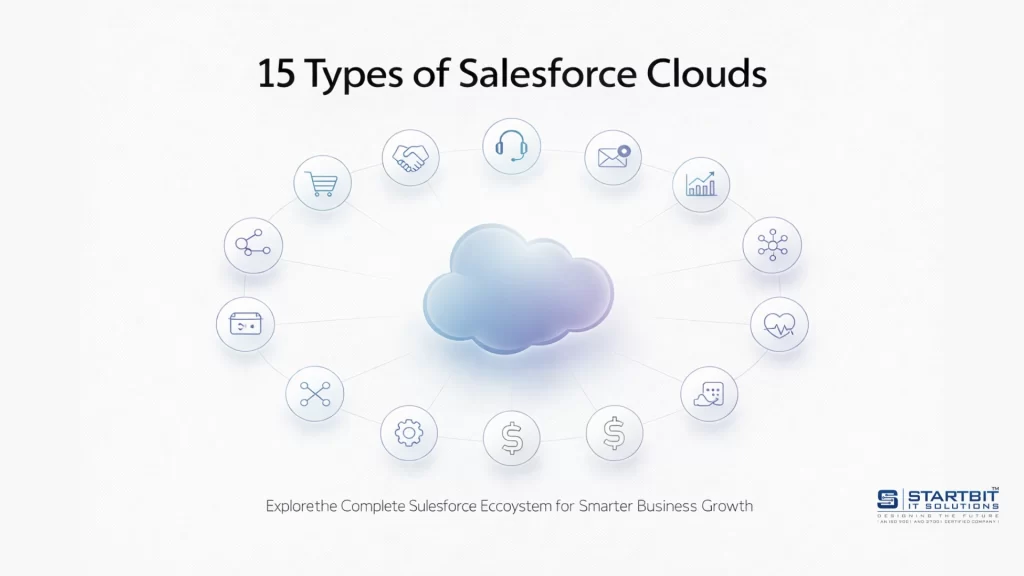
Salesforce is one of the world’s leading CRM platforms, trusted by businesses of all sizes. But many people still think Salesforce is just a single tool. In reality, it offers a powerful ecosystem of cloud-based products designed for different business needs.
What is a Salesforce Cloud?
A Salesforce Cloud is a group of cloud-based tools within the Salesforce platform that are designed to handle specific business functions such as sales, marketing, customer service, analytics, and more.
Each cloud is built for a particular purpose, but all of them run on the same platform and share data in real time. This means different teams in a business can work together more efficiently using one connected system.
With Salesforce Clouds, businesses can:
- Manage customer information in one place
- Automate daily tasks and workflows
- Improve team productivity and collaboration
- Make better decisions using real-time data and insights
In simple terms, Salesforce Clouds turn a standard CRM into a complete, scalable business solution that supports every stage of the customer journey.
Types of Salesforce Clouds (Categorized List)
To better understand Salesforce products, here’s how they are categorized:
1. Core CRM Salesforce Clouds
- Sales Cloud
- Service Cloud
- Marketing Cloud
- Experience Cloud
- Commerce Cloud
- CRM Analytics
2. Platform & Integration Clouds
- Integration Cloud (MuleSoft)
- Agentforce Platform (App Cloud)
- IoT Cloud
3. Industry-Specific Salesforce Clouds
- Financial Services Cloud
- Health Cloud
- Manufacturing Cloud
- Education Cloud
- Nonprofit Cloud
- Life Sciences Cloud
1. Salesforce Sales Cloud
Salesforce Sales Cloud is a cloud-based CRM solution that helps businesses manage their entire sales process in one place. From capturing leads to closing deals, it provides complete visibility into customer interactions and sales activities.
It is mainly used to organize sales operations, track opportunities, and improve conversion rates with the help of automation and real-time data.
Key Features of Salesforce Sales Cloud
- Lead & Opportunity Management: Capture, assign, and track leads as they move through the sales pipeline until conversion.
- Account & Contact Management: Store and organize customer details, interactions, and communication history in one place.
- Opportunity & Product Management: Manage deals, track stages, and handle product details and pricing efficiently.
- Sales Forecasting: Predict future sales and revenue using real-time data and AI-driven insights.
- Campaign Management: Plan, execute, and monitor marketing campaigns to generate and nurture leads.
- Sales Analytics & Reports: Analyze sales performance with dashboards and reports for better decision-making.
- Workflow Automation: Automate repetitive tasks like follow-ups, approvals, and notifications to save time.
- Sales Collaboration: Enable team members to share updates, communicate, and work together on deals.
- Territory Management: Assign and manage sales teams based on regions, industries, or customer segments.
- CPQ (Configure, Price, Quote): Create accurate quotes quickly with automated pricing and product configuration.
- AI-Powered Insights (Einstein AI): Get intelligent recommendations like lead scoring and next best actions.
- Mobile Sales: Access customer data, update deals, and track activities from anywhere using mobile devices.
- Integration Capabilities: Connect seamlessly with other Salesforce clouds and third-party applications.
2. Salesforce Marketing Cloud
Salesforce Marketing Cloud is a powerful digital marketing platform that helps businesses create, automate, and personalize marketing campaigns across multiple channels such as email, social media, mobile, and web.
It allows companies to deliver the right message to the right audience at the right time, improving customer engagement and conversion rates.
Key Features of Salesforce Marketing Cloud
- Email Marketing: Create personalized email campaigns, segment audiences, and track performance with detailed analytics.
- Social Media Marketing: Schedule posts, engage with audiences, monitor conversations, and measure campaign performance across social platforms.
- Mobile Marketing: Run targeted campaigns using SMS, push notifications, and mobile messaging.
- Journey Builder (Customer Journey Automation): Design and automate customer journeys based on user behavior and interactions.
- Audience Segmentation & Personalization: Segment users based on demographics, behavior, and preferences to deliver tailored messages.
- Advertising Studio: Manage and optimize digital advertising campaigns across multiple platforms from one place.
- Data & Analytics: Collect customer data, track engagement, and gain insights to improve marketing strategies.
- Social Listening & Monitoring: Track brand mentions, customer feedback, and competitor activity on social media.
- Content Management: Store, organize, and manage marketing content in a centralized system.
- Marketing Automation: Automate workflows such as lead nurturing, follow-ups, and personalized content delivery.
- AI-Powered Personalization: Use AI to recommend content, predict behavior, and improve campaign performance.
- Real-Time Engagement Tracking: Monitor how customers interact with campaigns in real time for quick optimization.
3. Salesforce Service Cloud
Salesforce Service Cloud is a customer service platform that helps businesses manage support requests, resolve issues faster, and deliver a better customer experience.
It brings all customer interactions, like emails, chats, calls, and social messages, into one place, so support teams can respond quickly and efficiently.
Key Features of Salesforce Service Cloud
- Case Management: Manage all customer queries and support tickets in one system from start to resolution.
- Omnichannel Support: Connect with customers across multiple channels like email, chat, phone, and social media in one unified platform.
- Live Chat & Chatbots: Provide instant support through live chat and automate responses using AI-powered chatbots.
- Knowledge Base: Create a library of help articles and FAQs so customers and agents can find solutions quickly.
- Service Console (360° View): Give support agents a complete view of customer history, interactions, and issues in one dashboard.
- Case Routing & Assignment: Automatically assign cases to the right agent based on skills, priority, or availability.
- SLA Management: Track response and resolution times to meet service-level agreements and improve customer satisfaction.
- Service Analytics & Reports: Monitor team performance, case resolution time, and customer satisfaction with real-time reports.
- Field Service Management: Manage on-site service operations, including scheduling and real-time updates for field agents.
- Workflow Automation: Automate repetitive tasks like case updates, escalations, and notifications.
- Integration Capabilities: Easily connect with other Salesforce clouds and third-party tools for a seamless workflow.
4. Salesforce Experience Cloud
Salesforce Experience Cloud is a platform that helps businesses build their own online space where customers, partners, or employees can connect, interact, and find information easily.
Instead of relying only on emails or support teams, companies can create self-service portals and communities where users can solve problems, share ideas, and stay connected with the brand.
Key Features of Salesforce Experience Cloud
- Custom Portals: Create fully branded portals that match your business identity and give users a professional experience.
- Personalized Experience: Show different content to different users based on their needs, roles, or behavior.
- Self-Service Support: Let customers find answers on their own through FAQs, guides, and knowledge articles.
- Community Interaction: Users can ask questions, share solutions, and engage in discussions within the platform.
- Partner Collaboration: Give partners a dedicated space to manage deals, share updates, and work closely with your team.
- Knowledge Hub: Store all important information like articles, tutorials, and help documents in one place.
- Case Tracking: Customers can raise support requests and check their status without contacting support every time.
- Mobile-Friendly Access: Users can access the platform anytime from their phone or tablet.
- Easy Integration: Connect smoothly with other Salesforce tools and external systems for better workflow.
5. Salesforce Commerce Cloud
Salesforce Commerce Cloud is a powerful eCommerce platform that helps businesses create, manage, and scale online stores across multiple channels.
It allows brands to deliver smooth, personalized shopping experiences whether customers are buying from a website, mobile app, social media, or even physical stores.
Key Features of Salesforce Commerce Cloud
- Online Storefront Management: Build and manage customizable online stores with product catalogs, pricing, and content.
- Product Catalog Management: Organize products, categories, and pricing to ensure a smooth shopping experience.
- Personalized Shopping Experience: Show relevant products and offers based on customer behavior and preferences.
- AI-Powered Recommendations: Use AI to suggest products and increase conversions through smart recommendations.
- Omnichannel Commerce: Provide a seamless shopping experience across web, mobile, social media, and offline stores.
- Order & Inventory Management: Track orders, manage inventory, and handle fulfillment across multiple locations.
- Mobile Commerce: Optimize shopping experiences for mobile users with responsive design and app integration.
- Marketing & Promotions: Run campaigns, discounts, and special offers to boost sales and customer engagement.
- Content Management: Manage banners, product pages, and digital content to enhance the shopping journey.
- Customer Service Integration: Allow customers to check order status and get support directly within the platform.
- Analytics & Reporting: Track customer behavior, sales performance, and campaign results with detailed insights.
- Global Support (Localization): Support multiple currencies, languages, and regions for global businesses.
- Scalability & Security: Handle high traffic and ensure secure transactions with enterprise-level infrastructure.
6. CRM Analytics
CRM Analytics (formerly known as Salesforce Analytics Cloud) is a powerful tool that helps businesses turn their data into clear insights and smart decisions.
Instead of just showing raw numbers, it helps you understand trends, predict outcomes, and take action based on real-time data. It connects data from different sources and presents it in a simple, visual way.
Key Features of CRM Analytics
- Interactive Dashboards: Create dynamic dashboards to track key metrics and monitor business performance in real time.
- Data Visualization: Convert complex data into easy-to-understand charts, graphs, and visuals.
- Data Exploration: Explore data in detail to find patterns, trends, and hidden insights.
- Predictive Analytics (AI Insights): Use AI and machine learning to forecast future trends and outcomes.
- Data Integration: Combine data from multiple sources (CRM, external apps, databases) into one unified view.
- Natural Language Queries: Ask questions in simple language and get instant answers with visual reports.
- Embedded Analytics: Access insights directly within Salesforce workflows and applications.
- Mobile Analytics: View reports and dashboards on mobile devices for on-the-go decision-making.
- Collaboration & Sharing: Share dashboards and insights with teams to improve collaboration and strategy.
- Data Security & Governance: Protect sensitive data with strong security and compliance controls.
- AppExchange Integration: Extend functionality with pre-built analytics apps from Salesforce AppExchange.
7. Salesforce Integration Cloud
Salesforce Integration Cloud, powered by MuleSoft, is a solution that helps businesses connect Salesforce with other systems, applications, and databases.
In most organizations, data is spread across multiple tools like ERP systems, marketing platforms, and third-party apps. Integration Cloud brings all this data together, allowing systems to communicate and work as one unified platform.
Key Features of Salesforce Integration Cloud
- API-Led Connectivity: Build secure APIs to connect different systems and enable smooth data flow across applications.
- Pre-Built Connectors: Use ready-made connectors for platforms like SAP, Oracle, and Microsoft systems to speed up integration.
- Data Synchronization: Keep data updated in real time across multiple systems to avoid duplication and errors.
- Low-Code & Pro-Code Support: Create integrations using simple drag-and-drop tools or advanced coding for complex needs.
- Automation Workflows: Automate processes between systems, such as syncing customer data or triggering actions across platforms.
- System Integration: Connect CRM, ERP, marketing tools, and databases into one centralized ecosystem.
- Scalable Architecture: Handle large volumes of data and complex integrations as your business grows.
- Security & Governance: Ensure secure data exchange with proper access control and compliance measures.
8. Agentforce Platform
Agentforce Platform (formerly Salesforce App Cloud) is a powerful development platform that allows businesses to build custom applications, automate workflows, and extend Salesforce based on their specific needs. Instead of adjusting your business to fit the software, this platform lets you create solutions that fit your business perfectly – whether it’s a simple automation or a complex enterprise application.
Key Features of Agentforce Platform
- Low-Code Development (Flow Builder): Build apps and automate processes using drag-and-drop tools without heavy coding.
- Pro-Code Development (Apex): Use Salesforce’s programming language (Apex) to create advanced logic and custom functionalities.
- Custom App Development: Build fully customized applications tailored to your business workflows and operations.
- AI-Powered Automation: Use AI to automate tasks, trigger actions, and improve decision-making.
- Custom UI Development: Design user-friendly interfaces and dashboards for better user experience.
- Real-Time Data Integration: Connect and use data from multiple sources in real time within your applications.
- Workflow Automation: Automate business processes like approvals, notifications, and task assignments.
- Enterprise-Grade Security: Ensure data protection, access control, and compliance at every level.
- Scalability: Easily scale applications as your business grows without performance issues.
9. Salesforce IoT Cloud
Salesforce IoT Cloud is a platform that allows businesses to connect smart devices, sensors, and third-party systems to Salesforce.
It turns the data from these devices into real-time insights, helping businesses act immediately, improve operations, and enhance customer experiences.
Key Features of Salesforce IoT Cloud
- Real-Time Data Processing: Collect and analyze data from connected devices as it happens, enabling instant action.
- Event-Driven Automation: Trigger automated workflows and notifications based on device events or thresholds.
- Device Monitoring: Monitor the performance and status of devices in real time to detect issues early.
- Predictive Maintenance: Use analytics and AI to predict equipment failures and schedule maintenance before problems occur.
- Integration with Salesforce: Connect IoT data seamlessly with Salesforce applications for a complete view of operations and customers.
- Scalability: Handle millions of device events per second as your network of connected devices grows.
- Custom Application Development: Build apps that leverage IoT data to optimize business processes or customer experiences.
- Data Visualization: Visualize device metrics, trends, and insights with dashboards for quick decision-making.
- Secure Device Connectivity: Ensure secure data transfer from devices to the cloud with encryption and access controls.
10. Manufacturing Cloud
Agentforce Manufacturing Cloud (formerly Salesforce Manufacturing Cloud) is a specialized solution designed to help manufacturers streamline sales, service, and operational processes.
It combines sales data, production forecasts, and partner collaboration tools into one platform, enabling manufacturers to make informed decisions, optimize operations, and improve customer satisfaction.
Key Features of Agentforce Manufacturing Cloud
- Sales Agreement Management: Track and manage all sales agreements to ensure accurate commitments and smooth operations.
- Demand Forecasting: Align sales with production forecasts to reduce overstocking or stockouts and improve supply chain efficiency.
- Partner Collaboration: Collaborate with distributors, suppliers, and partners in real time to optimize sales and service operations.
- Operational Insights: Gain actionable insights into production, sales performance, and customer needs.
- Workflow Automation: Automate routine processes like approvals, notifications, and order tracking to save time.
- Customer Service Management: Ensure seamless service delivery by connecting customer data with operational processes.
- Data Unification: Bring together data from different systems into one platform for a clear, comprehensive view.
- Analytics & Reporting: Track key performance metrics for sales, production, and customer satisfaction.
- Integration Capabilities: Connect with ERP systems, CRM tools, and other manufacturing software for seamless operations.
11. Financial Services Cloud
Agentforce Financial Services Cloud (formerly Salesforce Financial Services Cloud) is a cloud-based platform designed specifically for financial institutions.
It helps banks, investment firms, and insurance companies manage customer relationships, streamline operations, and stay compliant, all in one unified system. The platform centralizes client data, financial accounts, and interactions, allowing teams to deliver personalized and secure financial services.
Key Features of Agentforce Financial Services Cloud
- Client Portfolio Management: Maintain a comprehensive view of client accounts, financial holdings, and investment portfolios.
- Relationship Tracking: Track all interactions with clients, prospects, and partners to strengthen relationships.
- Compliance Management: Monitor regulatory requirements, track compliance tasks, and maintain audit-ready records.
- Financial Account Management: Manage multiple types of accounts, including banking, insurance, and investment accounts.
- Opportunity & Referral Management: Identify new business opportunities, track referrals, and manage leads efficiently.
- Task & Workflow Automation: Automate repetitive processes like approvals, reminders, and notifications.
- Reporting & Analytics: Generate insights on client portfolios, business performance, and financial trends.
- Secure Data Access: Ensure sensitive financial data is protected with enterprise-grade security.
- Collaboration Tools: Enable teams to work together on client cases, financial plans, and advisory tasks.
- Integration Capabilities: Connect with third-party financial systems, CRM tools, and analytics platforms.
12. Salesforce Education Cloud
Salesforce Education Cloud is a cloud-based platform designed specifically for educational institutions.
It helps schools, colleges, and universities manage student data, track academic progress, and communicate efficiently with staff, students, and parents. The platform centralizes all institutional processes, making it easier to automate workflows, improve engagement, and make data-driven decisions.
Key Features of Education Cloud
- Student Lifecycle Management: Track a student’s journey from admissions to graduation in a single platform.
- Admissions Automation: Streamline the application and enrollment process, reducing manual effort and errors.
- Student Data Management: Maintain all academic, personal, and administrative data in one centralized system.
- Progress Tracking & Reporting: Monitor student performance, grades, and attendance with real-time dashboards.
- Stakeholder Communication: Engage effectively with students, parents, faculty, and staff through emails, portals, and notifications.
- Workflow Automation: Automate routine tasks such as approvals, reminders, and follow-ups to save time.
- Customizable Dashboards: Create dashboards tailored to institutional needs for tracking KPIs and institutional metrics.
- Collaboration Tools: Enable teachers, administrators, and staff to collaborate efficiently on student and institutional tasks.
- Integration Capabilities: Connect with learning management systems (LMS), financial systems, and other institutional applications.
- Analytics & Insights: Gain actionable insights on student engagement, retention, and overall institutional performance.
13. Salesforce Nonprofit Cloud
Salesforce Nonprofit Cloud is a cloud-based platform designed to help nonprofit organizations manage operations, fundraising, and donor relationships.
It provides a centralized system to track donors, manage programs, and engage constituents effectively. By using Nonprofit Cloud, organizations can focus on their mission while streamlining administrative and fundraising tasks.
Key Features of Nonprofit Cloud
- Donor Management: Keep detailed records of donors, track contributions, and understand giving patterns.
- Fundraising Automation: Automate campaigns, donation processing, and follow-ups to save time and increase efficiency.
- Program Management: Organize and track programs, events, and projects to ensure impact and accountability.
- Constituent Engagement: Communicate effectively with donors, volunteers, and beneficiaries through targeted messaging.
- Volunteer Management: Track volunteer participation, assignments, and contributions to support programs.
- Reporting & Analytics: Generate real-time reports to measure fundraising success, donor trends, and program outcomes.
- Workflow Automation: Streamline repetitive tasks like thank-you emails, donation acknowledgments, and event reminders.
- Customizable Platform: Tailor fields, objects, and processes to meet the unique needs of your nonprofit.
- Integration Capabilities: Connect with payment processors, email marketing tools, and other nonprofit solutions.
- Security & Compliance: Protect sensitive donor and organizational data with enterprise-grade security and compliance measures.
14. Salesforce Health Cloud
Salesforce Health Cloud is a specialized platform designed for healthcare organizations to manage patient data, improve care coordination, and deliver personalized healthcare experiences.
It brings all patient information -medical history, interactions, and care plans – into one place, helping providers offer better, faster, and more connected care.
Key Features of Salesforce Health Cloud
- Patient Data Management: Store and manage complete patient records, including medical history, treatments, and interactions in one system.
- Care Coordination: Connect doctors, nurses, and care teams to ensure smooth communication and better patient outcomes.
- Patient Engagement: Communicate with patients through multiple channels and provide personalized care experiences.
- Care Plans Management: Create and track personalized care plans for patients to improve treatment effectiveness.
- Appointment & Task Management: Schedule appointments, track follow-ups, and manage healthcare tasks efficiently.
- Integration with Health Systems: Connect with electronic health records (EHR) and other healthcare systems for seamless data sharing.
- Real-Time Insights & Analytics: Analyze patient data to improve care quality and operational efficiency.
- Mobile Access: Allow healthcare providers to access patient data anytime, anywhere.
- Security & Compliance: Ensure patient data is protected with strict healthcare regulations and security standards.
15. Salesforce Life Sciences Cloud
Salesforce Life Sciences Cloud is a specialized platform designed for pharmaceutical, biotech, and medical organizations to manage clinical trials, patient engagement, and healthcare operations.
It helps companies streamline complex processes like research, patient services, and commercial operations while keeping everything connected in one system.
Key Features of Life Sciences Cloud
- Clinical Trials Management: Manage and track clinical trials, including patient enrollment, progress, and outcomes.
- Patient Engagement: Connect with patients throughout their treatment journey and provide personalized support.
- Pharma Operations Management: Handle commercial operations such as product distribution, sales, and compliance.
- Data Management: Centralize data from research, patients, and operations for better visibility and control.
- Workflow Automation: Automate processes like approvals, reporting, and patient communication.
- Collaboration Tools: Enable teams, researchers, and healthcare providers to work together efficiently.
- Analytics & Insights: Gain insights into clinical performance, patient outcomes, and operational efficiency.
- Compliance & Security: Ensure strict compliance with healthcare regulations and protect sensitive data.
- Integration Capabilities: Connect with healthcare systems, research tools, and external databases.
Conclusion
Salesforce is more than just a CRM – it’s a complete ecosystem of cloud solutions that helps businesses manage sales, marketing, service, operations, and industry-specific needs in one connected platform.
By understanding these 15 Salesforce Clouds, businesses can choose the right tools to improve efficiency, enhance customer experience, and drive growth.
To make the most of Salesforce, expert guidance is key. Startbit IT Solutions helps you select, implement, customize, and optimize Salesforce Clouds so you get maximum value with a scalable, future-ready system.
Short Summary
This article provides a complete breakdown of the 15 Salesforce Clouds and their features, explaining how each cloud is designed to handle specific business functions. It starts by introducing what the Salesforce Cloud is and how all clouds work together on a single platform to manage data, automate workflows, and improve productivity.
The article then categorizes Salesforce Clouds into core CRM, industry-specific, and platform/integration solutions, making it easier to understand their roles. It further explains each cloud in detail – covering features, use cases, and how they help businesses in areas like sales, marketing, customer service, analytics, eCommerce, and operations.
Overall, the article helps readers clearly understand how Salesforce Clouds can be used together to streamline business processes, enhance customer experience, and build a scalable, data-driven system for growth.