

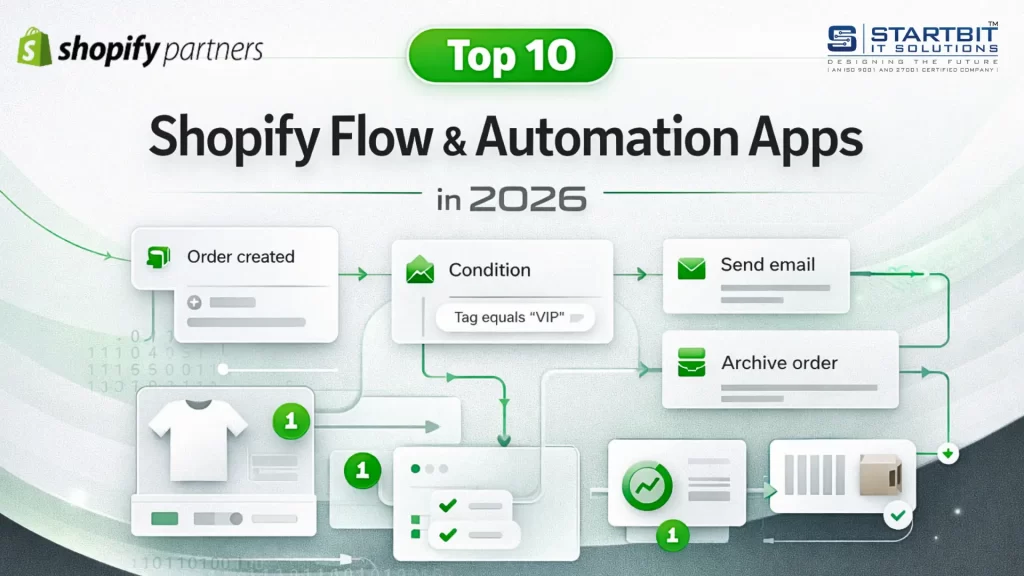
Automating your workflows can be a game-changer for your business, saving time, reducing manual effort, and minimizing errors as you scale.
Shopify Flow allows you to create custom workflows that streamline repetitive tasks, from order management to customer interactions. You can further enhance efficiency by using Flow-compatible apps that integrate seamlessly and extend automation with minimal setup.
Shopify Flow apps help automate day-to-day operations such as inventory updates, order processing, customer notifications, and fulfillment actions. These workflows run automatically based on predefined triggers and conditions, ensuring smooth operations without constant manual intervention.
Shopify Flow helps execute tasks based on predefined triggers and conditions, improving operational efficiency and reducing the likelihood of human error.
For example, you can configure a Shopify Flow to automatically tag high-value customer orders, send personalized emails, and notify the sales team for follow-ups – improving both customer experience and internal efficiency.
Top Flows App:
1: SC Order Tags & Flows:
This workflow helps automatically add order tags based on the defined automation rules.
https://apps.shopify.com/ordertagger
2 Arigato Automation:
Shopify Flow helps automate logic using order, product, or API events, webhooks, schedules, or one-click runs.
https://apps.shopify.com/mr-arigato-task-automator
3 Chargeflow Dispute Chargebacks:
Chargeflow is a fully automated chargeback prevention, recovery, and deflection solution for Shopify merchants. It helps you scale your business without wasting time on disputes, while offering detailed analytics and proactive fraud prevention.
https://apps.shopify.com/chargeflow
4 Mechanic:
Mechanic is an enterprise-grade workflow automation platform for stores that helps automatically add tags to orders, products, and customers based on defined rules.
https://apps.shopify.com/mechanic
5 React Flow—Workflow Automation:
Automate key store operations with ease using workflow automation tools. You can send inventory alert emails, automatically email or cancel unpaid orders, and auto-fulfill or cancel orders from blacklisted customers. The system can also apply automatic discounts, issue loyalty store credits, add tags automatically, and track fraud-risk orders by tagging them in real time. This helps streamline store management and reduces manual effort, ensuring smoother operations and better customer experience.
https://apps.shopify.com/react-flow
6 MESA: Workflow Automation:
MESA easily automates your Shopify store by connecting with hundreds of apps, services, and internal systems, including ERP, CRM, APIs, and more.
7 syncX Order Export CSV 3PL ERP:
Order Export automatically exports orders based on a scheduled frequency. It supports nearly any format, including CSV, XML, and JSON, and with advanced Shopify Liquid formatting, it can be customized to handle virtually any export requirement.
https://apps.shopify.com/exportible
8 Order Automator:
Order Automator offers a suite of features designed to help you and your team automate tasks and enhance your store’s functionality.
https://apps.shopify.com/order-automator
9 Shopify Flow:
Shopify’s native automation tool that makes it easy to build workflows for marketing, order fulfillment, inventory management, fraud prevention, and more using a visual builder.
10 EZ Fulfill ‑ Auto Fulfillment:
With EZ Fulfill, you can bulk update your orders’ tracking numbers and bulk fulfill orders using the scheduler. You can also mark orders as paid, add tags, and keep your customers informed by sending them emails with their tracking numbers.
https://apps.shopify.com/ez-fulfill
Pros:
- Automates repetitive tasks using triggers, conditions, and actions.
- Helps reduce manual work and human error.
- Native Shopify app with deep integration across orders, customers, and products.
- Supports workflows for tagging, notifications, fraud prevention, and inventory management.
- Easy to use with a visual workflow builder.
- Integrates with apps like email tools, fulfillment services, and more.
Cons:
- Limited customization compared to fully custom-built automation solutions.
- Complex workflows may require time to design and test properly.
- Depending on supported triggers and actions, some advanced use cases may not be possible.
Conclusion:
Shopify Flow and automation apps play a crucial role in helping eCommerce businesses scale efficiently in 2026. By automating tasks like order processing, tagging, inventory management, fraud prevention, and customer communication, merchants can reduce manual effort, minimize errors, and focus on growth. The right automation setup ensures smoother operations and a more reliable Shopify ecosystem.
At Startbit IT Solutions, we help businesses design and implement smart Shopify automation strategies – from advanced Shopify Flow workflows and third-party app integrations to custom logic and scalable Shopify development. Our goal is to ensure your automation is strategic, future-ready, and aligned with your business growth.
If you’re looking to streamline operations and build a smarter Shopify store, Startbit IT Solutions is your trusted partner for everything Shopify – from automation to advanced development.