

A Conversion Rate Optimization (CRO) audit is a comprehensive review of a website’s performance to uncover what’s helping and what’s hindering conversions. It involves evaluating user behavior, site design, messaging, and analytics to pinpoint obstacles in the conversion process and highlight opportunities for improvement. By analyzing elements such as navigation, page layout, calls-to-action, content relevance, and overall user experience, a CRO audit helps you make data-informed changes that boost conversion rates and improve business outcomes.
Key Features:
- A CRO audit analyzes your entire conversion funnel to uncover where and why visitors leave without completing a purchase.
- A CRO audit helps you focus on high-traffic pages, such as product pages and the checkout, to drive the biggest impact.
- A CRO audit helps maintain optimal conversion rates and identify new issues early before they impact performance.
What Is a Shopify CRO Audit?
A Shopify CRO audit (Conversion Rate Optimization audit) is a comprehensive, data-driven evaluation of your Shopify store designed to uncover why visitors are not converting, and what can be done to fix it. Instead of focusing on increasing traffic, a CRO audit focuses on improving the percentage of visitors who complete valuable actions, such as making a purchase, adding items to the cart, or signing up for a newsletter.
In simple terms, it’s a deep analysis of your store’s entire conversion funnel, from the moment a visitor lands on your website to the final checkout confirmation page. The purpose is to identify friction points, usability issues, technical barriers, or messaging gaps that may be preventing customers from completing their journey.
What Does a Shopify CRO Audit Evaluate?
A Shopify CRO audit examines the key aspects of your store that determine whether visitors buy from you or leave without taking action. It checks how easy your website is to use, how clearly you explain your products, and how smoothly customers can complete their purchase. The main goal is to find problems that stop people from converting and improve them to increase sales.
1. Navigation and Site Structure
Your website should be simple and easy to explore. If visitors cannot quickly find what they are looking for, they may leave.
A CRO audit checks:
- Clear and organized menus
- Proper category structure
- Easy-to-use search bar
- Internal links between pages
- Breadcrumb navigation
2. Product Page Optimization
Product pages are where buying decisions happen. If your product page is not clear or convincing, customers may not add items to their cart.
A CRO audit reviews:
- Clear product titles
- Simple and benefit-focused descriptions
- High-quality images
- Product videos
- Clear pricing and discounts
- Customer reviews and ratings
- Shipping details and stock information
3. Checkout Experience
The checkout process should be fast and simple. A complicated checkout can lead to cart abandonment.
A CRO audit checks:
- Number of checkout steps
- Length of forms
- Guest checkout option
- Payment methods available
- Clear shipping costs
- Security and trust badges
4. Calls-to-Action (CTAs)
CTAs are buttons like “Add to Cart” or “Buy Now.” They guide customers on what to do next.
A CRO audit reviews:
- Button placement
- Button color and visibility
- Clear wording
- Mobile visibility
- Consistency across pages
5. Content Clarity and Messaging
Your content should clearly explain why customers should buy from you.
A CRO audit checks:
- Clear value proposition
- Strong headlines
- Benefit-focused content
- FAQ section
- Consistent brand tone
6. Mobile Responsiveness
Most people shop using mobile phones. Your store must work perfectly on mobile devices.
A CRO audit examines:
- Mobile-friendly layout
- Easy-to-click buttons
- Proper image display
- Smooth scrolling
- Mobile checkout experience
7. Page Speed and Technical Performance
If your website loads slowly, visitors may leave before it opens.
A CRO audit checks:
- Page loading speed
- Broken links
- Too many apps or scripts
- Image size optimization
8. Trust Signals and Social Proof
Customers need to trust your store before buying.
A CRO audit reviews:
- Customer reviews
- Testimonials
- Return policy
- Guarantees
- Secure payment badges
- Clear contact information
How to Execute a High-Impact CRO Audit
1. Define your goals:
A CRO audit helps define your conversion goals and understand how they align with your broader business objectives. For example, if your goal is to boost sales for a new product line, you should focus on improving conversion rates for those specific product pages and strategically place more calls-to-action throughout the customer journey to support that goal.
2. Identify priority pages:
Start by creating a list of the most important pages on your website. Focus on high-traffic pages such as your main landing page, checkout page, and popular product pages. Use analytics tools like Google Analytics to identify which pages are strong candidates for optimization. For example, look for high-traffic pages with high bounce rates, as these may indicate friction points that need improvement.
3. Study user behavior:
CRO audit tools help you monitor how visitors interact with your website and identify common behavior patterns. These insights allow you to uncover friction points and optimization opportunities. You can also explore the Shopify App Store to find useful applications that support and enhance your CRO audit efforts.
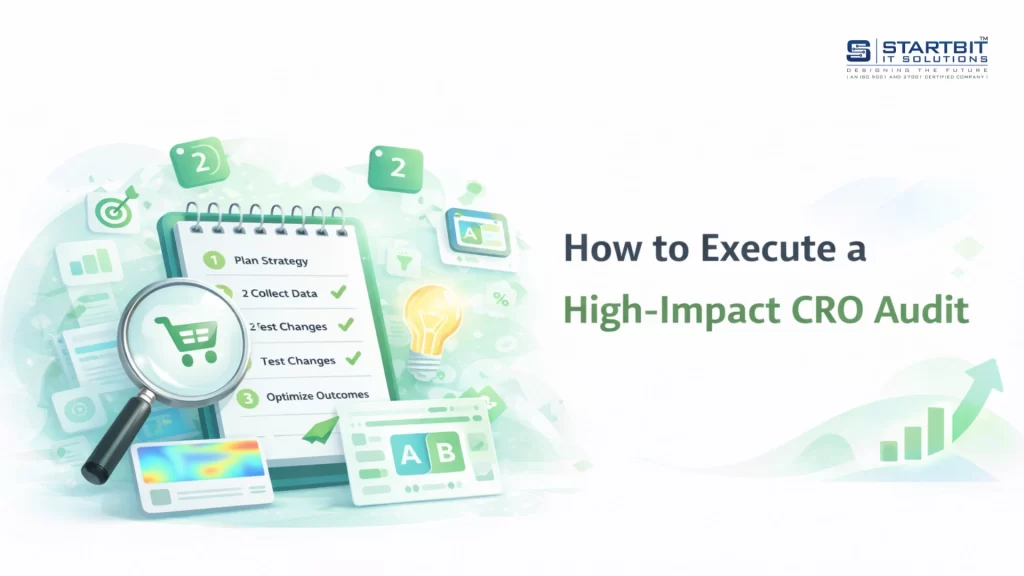
4. Focus on quick wins:
A CRO audit helps identify simple issues that may be lowering your conversion rates, such as slow-loading pages, website bugs, or complicated checkout processes. For quick wins, you can optimize your website for mobile devices, improve the design and placement of your CTA buttons, and create more engaging content, including compelling product descriptions.
5. Test out improvements:
Develop solutions to improve conversion rates in other areas of your website. Test these solutions by implementing targeted changes where improvements are needed. Use quantitative research, such as user metrics and analytics data, along with qualitative insights like customer feedback and testimonials, to guide and refine your optimization efforts.
6. Monitor results:
CRO audit tools help track traffic fluctuations across different sections of your website and measure how effectively users complete key conversion actions, such as newsletter sign-ups or product purchases.
You should run CRO audits at regular intervals, at least every six months. In between full audits, continue monitoring your conversion rates to ensure you don’t overlook any emerging website issues or performance declines.
Top 5 Advanced Shopify CRO Strategies:
After covering the fundamentals of your Shopify CRO audit, the next step is to implement strategic improvements that elevate your overall conversion optimization efforts.
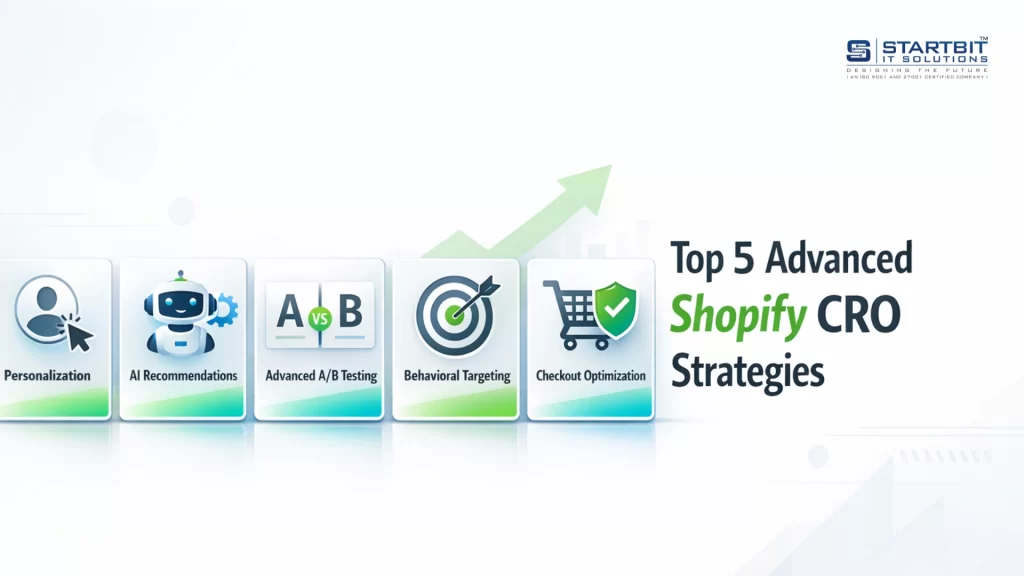
- Exit-Intent Popups: Smart popups can help you capture leads and increase sales without disrupting the user experience. When used strategically, they engage visitors at the right moment, encouraging actions such as newsletter sign-ups, limited-time purchases, or redeeming special offers without feeling intrusive.
- Contextual Promotions: You can personalize offers based on user behavior. For example, display an upsell or cross-sell to visitors who are viewing their cart or browsing specific product pages.
- Advanced Targeting: Use geo-targeting to display region-specific promotions and create tailored offers for both new and returning visitors.
- Compliance-First: You can integrate popups with your site’s cookie consent system to ensure compliance with GDPR and other privacy regulations. Additionally, include clear consent checkboxes with appropriate disclosures to transparently collect customer data and maintain user trust.
- A/B Testing: Test multiple pop-up sequences such as a welcome offer followed by an exit-intent discount, and analyze performance metrics to identify which flow drives the most email sign-ups and conversions.
Shopify CRO Tools to Use in 2026
To improve your Shopify conversion rate in 2026, using the right tools is essential. Shopify CRO tools help you understand customer behavior, test improvements, personalize user experiences, and make data-driven decisions. Below are the most important types of CRO tools every Shopify store should consider.
Heatmap and Session Recording Tools:
Heatmap and session recording tools help you see exactly how visitors interact with your website. They show where users click, how far they scroll, and which sections they ignore. Session recordings allow you to watch real user journeys and identify confusion, hesitation, or friction points.
These tools are valuable for optimizing product pages, landing pages, and checkout flows. By understanding real behavior, you can fix layout issues, improve button placement, and remove obstacles that prevent conversions.
A/B Testing Platforms
A/B testing platforms allow you to test two versions of a page or element to see which performs better. You can test headlines, CTA buttons, pricing displays, layouts, pop-ups, or even checkout steps.
Instead of making changes based on assumptions, A/B testing provides data-backed results. Even small changes, such as adjusting button text or repositioning a product image, can significantly increase conversions when tested properly.
Personalization Engines
Personalization tools customize the shopping experience based on user behavior, location, or purchase history. These tools can display recommended products, dynamic discounts, upsell offers, or location-based promotions.
Personalization increases relevance, improves customer engagement, and boosts average order value. In 2026, shoppers expect tailored experiences, making personalization an important part of any Shopify CRO strategy.
Analytics Dashboards
Analytics dashboards provide the data needed to measure store performance. They track conversion rates, add-to-cart rates, checkout abandonment, traffic sources, and customer behavior across the funnel.
Without analytics, it is impossible to know where visitors are dropping off or which pages need improvement. Advanced reporting helps you focus on high-impact optimization areas and measure the success of your CRO efforts.
Pop-Up Optimization Tools
Pop-up tools help capture leads and recover abandoning visitors. They can be used for exit-intent offers, email sign-ups, limited-time discounts, and free shipping announcements.
When used strategically, pop-ups increase engagement and conversions without harming user experience. Many advanced tools also allow audience targeting and A/B testing to maximize results.
Customer Feedback and Survey Apps
Customer feedback tools collect insights directly from visitors. They help you understand why users leave, what concerns they have, and what improvements they expect.
On-site surveys, post-purchase feedback forms, and exit surveys provide valuable qualitative data. This information helps you address customer objections and improve your store based on real user input.
Shopify App Store Integration
The Shopify App Store offers a wide range of CRO tools that integrate directly with your store. These tools are designed to work smoothly within the Shopify ecosystem, making setup and management simple.
When selecting tools, focus on performance impact, ease of use, data accuracy, and long-term value. Avoid installing too many apps, as excessive scripts can slow down your website and negatively affect conversions.
Shopify CRO Best Practices
If you want better sales from your Shopify store, you need a clear and smart optimization approach. Below are simple and effective Shopify CRO best practices that can help you improve conversions and grow your business.
- Use Data Before Making Decisions: Do not guess, check your data first. Look at your conversion rate, bounce rate, add-to-cart rate, and checkout drop-offs. Use analytics and heatmaps to understand what customers are actually doing on your website. When decisions are based on real numbers, results are stronger and more reliable.
- Test Continuously: Small changes can create big improvements. Test different headlines, button colors, product layouts, offers, and checkout designs. Run A/B tests regularly to see what works best. Continuous testing helps you keep improving your store step by step.
- Focus on Mobile First: Most shoppers use their phones. Your Shopify store must look clean and work smoothly on mobile devices. Make sure buttons are easy to tap, text is readable, images load properly, and checkout is simple. A good mobile experience directly increases sales.
- Improve Page Speed: People do not wait for slow websites. If your pages load slowly, visitors will leave. Compress images, remove unnecessary apps, and keep your store lightweight. Faster websites build trust and improve conversion rates.
- Build Trust with Reviews and Testimonials: Customers buy when they feel safe. Show product reviews, star ratings, testimonials, return policies, and secure payment badges clearly. The more trust you build, the easier it becomes for customers to make a purchase.
- Keep Your Store Simple: Too much information or too many options can confuse visitors. Keep your design clean and easy to understand. Highlight the most important details and guide customers clearly toward the next step. Simple stores convert better.
- Focus on Benefits, Not Just Features: Instead of only listing product features, explain how the product helps the customer. Show the value and the result they will get. Benefit-driven messaging makes your offer more attractive and convincing.
- Match Optimization with Your Brand: Your design, tone, and offers should match your brand style. Whether your brand is premium, modern, or budget-friendly, your optimization efforts should stay consistent. This builds stronger brand identity and long-term customer loyalty.
When to Consider Shopify CRO Services
While many store owners try to optimize conversions on their own, there comes a point when professional support becomes valuable. If your traffic is growing but sales are not increasing at the same rate, or if you are unsure why visitors are not converting, it may be time to consider Shopify CRO services.
Professional Shopify CRO agencies bring structured processes, advanced tools, and specialized expertise to improve store performance. They focus on measurable results rather than guesswork.
A professional Shopify CRO team can help you:
- Conduct Full Funnel Audits
Experts analyze your entire customer journey, from landing page to checkout, to identify drop-off points, friction areas, and missed revenue opportunities.
- Implement Advanced A/B Testing
Agencies design and execute structured experiments to test layouts, messaging, pricing strategies, and CTAs. This ensures every improvement is backed by real performance data.
- Improve UX Design
User experience plays a major role in conversions. CRO professionals optimize navigation, page structure, product presentation, and mobile usability to create a smooth shopping experience.
- Optimize Checkout Flows
Checkout optimization focuses on reducing cart abandonment by simplifying steps, improving trust signals, and ensuring payment flexibility.
- Create Data-Backed Growth Strategies
Rather than making random improvements, Shopify CRO specialists develop long-term strategies based on analytics, behavioral psychology, and conversion frameworks.
Conclusion
Shopify conversion rate optimization is no longer optional – it is essential for sustainable eCommerce growth in 2026. Driving traffic to your store is important, but real success comes from turning that traffic into paying customers. A well-structured Shopify CRO audit helps you identify where visitors drop off, what is slowing down their journey, and how you can remove those barriers to increase sales.
However, effective CRO requires expertise, continuous testing, and a clear growth roadmap. That’s where Startbit IT Solutions can help.
At Startbit IT Solutions, we support Shopify businesses at every stage of their optimization journey. Our team helps with:
- Comprehensive Shopify CRO audits
- Advanced A/B testing and experimentation
- UX and UI improvements
- Checkout optimization
- Performance and speed enhancements
- Personalization and targeting strategies
- Abandonment recovery implementation
- Data-driven growth planning
We combine analytics, design expertise, and proven CRO frameworks to deliver measurable conversion rate increases and long-term revenue growth.
If you’re ready to improve your Shopify conversion rate and unlock the full potential of your store, Startbit IT Solutions is here to help you optimize, scale, and succeed.