

How to Optimize Images for Faster Shopify Store Speed

How to Optimize Images for Faster Shopify Store Speed

Shopify
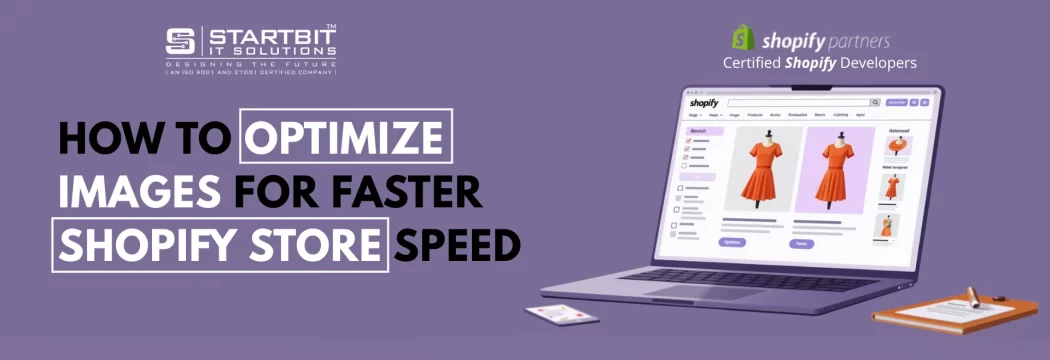
Why Image Optimization Matters for Shopify Stores In e-commerce, your website’s loading speed can literally make or break a sale. According to Google, a delay of just one second in page load time can reduce conversions by up to 7%. For Shopify store owners, that means fewer sales, higher bounce rates, and lower SEO rankings. Images are often the largest files on your website, contributing to over 50% of total page weight. If not optimized, they slow down your Shopify store drastically. The good news? With the right image optimization strategy, you can dramatically improve store performance, user experience, and even SEO rankings - without losing image quality. What Is Image Optimization? Image optimization is the process of reducing the file size of images without compromising visual quality. The goal…
Read More
Wix vs. Shopify: Which Is the Best eCommerce Platform in 2025? 

Wix vs. Shopify: Which Is the Best eCommerce Platform in 2025? 

Shopify
Choosing the right eCommerce platform is one of the most important decisions for any online business. With so many options available, Wix and Shopify often stand out as two of the most popular choices.  Both platforms are powerful in their own way, Wix is widely known as a flexible website builder with added eCommerce features, while Shopify was built specifically for online selling. But which one should you choose in 2025?  In this guide, we’ll break down Wix vs. Shopify across ease of use, scalability, design flexibility, marketing, SEO, AI tools, pricing, and more, so you can make the right choice for your business.  Wix vs. Shopify at a Glance  Feature Wix Shopify Ease of Use ⭐⭐⭐⭐⭐ Drag-and-drop editor, beginner-friendly ⭐⭐⭐⭐ Requires some technical knowledge for advanced customization E-commerce & Inventory ⭐⭐⭐ Basic inventory management, Third-party integrations…
Read More
SB Custom Product Fields – The Best Way to Add Product Customization in Shopify

SB Custom Product Fields – The Best Way to Add Product Customization in Shopify

Shopify
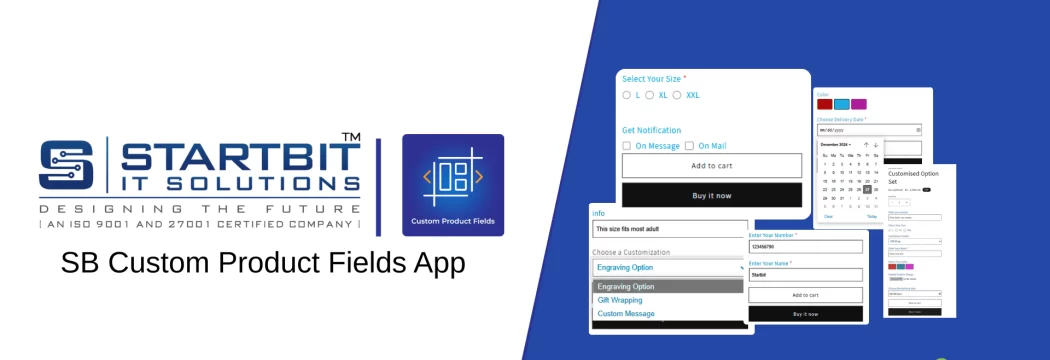
Shopify makes it easy to sell online, but when it comes to product customization, the default options are limited. If you sell products that need personalization — like custom mugs, T-shirts, furniture, jewelry, or event services — these limits can hold you back. That’s where SB Custom Product Fields helps. It’s a simple, powerful Shopify app that lets you add unlimited product customization fields, so your customers can personalize items exactly how they want. Why Product Customization is So Important in Shopify Imagine you’re running a Shopify store selling: Personalized t-shirts (customers want to add their name or design) Jewelry (engraving initials or messages) Cakes (selecting flavors, delivery date, and custom notes) Furniture (choosing fabric, size, and color) Now, Shopify’s default settings allow you to add only 3 options (like size, color,…
Read More
Why Choose Shopify for E-commerce: 19 Reasons to Consider

Why Choose Shopify for E-commerce: 19 Reasons to Consider

Shopify
Shopify is one of the most widely used e-commerce platforms on the internet today. From side-hustlers selling handmade crafts to multinational corporations pushing thousands of products daily, Shopify has become synonymous with online selling. But is it really the best fit for every business? That’s the big question. In today’s time, launching an online store is easier than ever, but choosing the right platform is still one of the most critical decisions. Shopify promises simplicity, scalability, and support. In this comprehensive guide, we're breaking down the top reasons for using Shopify. What is Shopify? Shopify is a cloud-based eCommerce solution that allows anyone to set up an online store and sell their products. Whether you're selling physical goods, digital downloads, or even subscriptions, Shopify gives you a ready-to-go framework that…
Read More
Complete Guide to Shopify & Third-Party Payment Gateway(2025)

Complete Guide to Shopify & Third-Party Payment Gateway(2025)

Shopify
What is a payment gateway?  A payment gateway is a type of technology that enables retailers to securely process payments from customers. It acts as a bridge between the customer and the e-commerce platform by encrypting and transmitting sensitive payment information, such as credit card numbers and billing addresses, from the customer's browser to your online store.  This secure transaction process ensures that payment data is safely delivered for approval and helps protect both the merchant and the customer from fraud.  Reference: https://www.shopify.com/blog/best-payment-gateways  Shopify Payments  Shopify Payments is Shopify’s own payment gateway that allows ecommerce merchants to process online and in-person payments through a single platform.  Shopify Payments complies with the Payment Card Industry Data Security Standard (PCI DSS) to protect your customers' data.  Reference: https://www.shopify.com/blog/best-payment-gateways#shopify-payments  Shopify’s payment gateway is…
Read More
How to Optimize Shopify Website in 2025?

How to Optimize Shopify Website in 2025?

Shopify
In the fast-evolving digital landscape of 2025, simply having a Shopify store isn’t enough—you need to optimize it meticulously to stand out. Online shoppers today are savvier, more demanding, and less patient than ever. With competition growing and attention spans shrinking, every extra second your page takes to load or every hiccup in navigation can cost you sales. And let's not forget—Google’s algorithms now prioritize user experience heavily in their ranking factors, making optimization a key player in your SEO strategy. Think of your website like a physical store. If people walk in and the shelves are disorganized, the lighting is bad, and the checkout line is slow, they’ll walk right out. That happens online if your Shopify site is cluttered, slow, or confusing. In 2025, users expect instant gratification,…
Read More
Shopify Web Pixels: The Ultimate Guide to Tracking

Shopify Web Pixels: The Ultimate Guide to Tracking

Shopify
What is a web pixel  A Shopify web pixel is a piece of JavaScript code used to monitor customer activities on an online store. The information gathered by these pixels is utilized for analytics and marketing purposes.  What do web pixels do?   Track customer events: Pixels track customer actions, including page views, adding products to carts, and submitting searches.  Improve security: Pixels boost security for the store and its customers.  Control data sharing: Pixels enable control over the sharing of customer data with third-party services  Prevent non-performing JavaScript: Pixels can block third-party code from running underperforming JavaScript.  Comply with privacy regulations: Pixels assist stores in meeting privacy compliance requirements.  How to add web pixels to a Shopify store?   App pixels: Install pixels through marketing and data collection apps  Custom pixels:…
Read More
Why Is Shopify So Popular?

Why Is Shopify So Popular?

Shopify
Shopify is a popular e-commerce platform and this is possible because it is easy to use, scalable, and also offers a lot of features. This platform is user-friendly and allows anyone to set up and manage an online store easily without requiring the user to learn any technical skills to get started. Understanding the Popularity of Shopify: The biggest reason for Shopify's popularity is its simple layout and easy setup. It is suitable for both small and large businesses. Simple and easy for beginners: Shopify is for everyone, even if you don’t have technical skills, anyone can easily design Shopify according to their needs. Quick setup: You can set up your Shopify store in no time. No coding is needed: Quickly set up your Shopify store using Shopify's themes. Order…
Read More
How To Optimize Shopify Store In 2025 

How To Optimize Shopify Store In 2025 

Shopify
Today maintaining customer engagement and Google ranking in Shopify stores is not an easy task. A slow-loading website has a bad user experience, as the user may leave the store without exploring the product, also a slow website will not rank in Google ranking. Therefore, you need to optimize your Shopify store.  Here are some points to optimize a Shopify store: Image Optimization  Reducing server request  File Minification  Technical Optimization  Design Optimization Image Optimization : There are 3 main components : Compression: Image compression removes unnecessary data and uses an algorithm to combine data and reduce the total number of colors needed.  Follow the steps to compress the image. Also here are online tools to compress images.  https://tinypng.com/   Image size and Server: Image size refers to the dimension of images.…
Read More
Upgrade your store with Shopify 2.0 : Features & Benefits

Upgrade your store with Shopify 2.0 : Features & Benefits

Shopify
Shopify 2.0 is a new version of Shopify that provides more features like better performance, fast loading, page customization, use of app blocks in the theme customizer, and a much better way to manage content. Key features in Shopify Store 2.0 1. Improve Performance and Faster Loading Speeds Shopify 2.0 provides better performance, and loading speed compared to old Shopify and also boosts up the SEO. 2. Updated Theme Editor  Shopify 2.0 has a much better theme editor which has many options like good UI and directly adding custom liquid code inside the page editor. Also, allow arranged content blocks. 3. Meta field Updates In The Shopify 2.0 meta fields have many new features like support media images, pdf, and others. 4. Customizable Sections on Every Page Shopify 2.0 provides…
Read More